Scholar
Motoori Norinaga
本居宣長 · 1730–1801 · Edo period
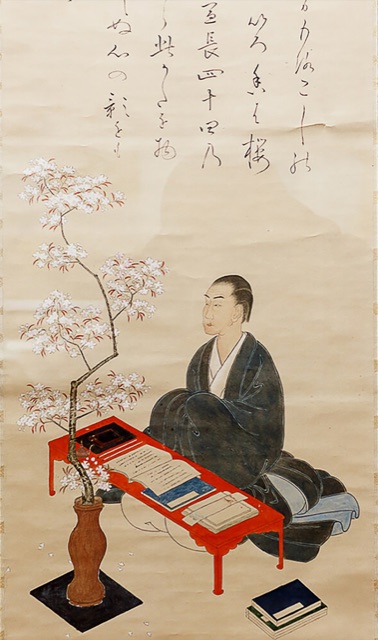
Motoori Norinaga (本居宣長) was an Edo-period scholar who spent his life reading old Japanese texts and asking what made them Japanese. He worked as a doctor by day, but his real work was with words — and he gave a name to one of the most important ideas in Japanese taste.
A doctor who read for a living
Norinaga made his living as a physician in a small town, seeing patients and studying at night. He belonged to a movement called kokugaku, "national learning," whose scholars wanted to look past centuries of Chinese and Buddhist influence and find an older, native Japanese way of feeling. His great project was the Kojiki, Japan's oldest book; he spent more than thirty years writing a line-by-line commentary on it, teaching people to read a text almost no one could still understand.
Naming a feeling
Reading The Tale of Genji, the thousand-year-old court novel, Norinaga put his finger on the feeling that runs all through it and gave it a name: mono no aware, "the pathos of things" — the gentle sadness we feel because nothing lasts. He argued this quiet, tender response to a passing world, not moral lessons, was the real heart of Japanese literature. It is still one of the most useful phrases for understanding Japanese art and its love of things that fade.
Portrait: Motoori Norinaga (self-portrait) · Public domain · via Wikimedia Commons
