Tea master
Sen no Rikyū
千利休 · 1522–1591 · Azuchi–Momoyama period
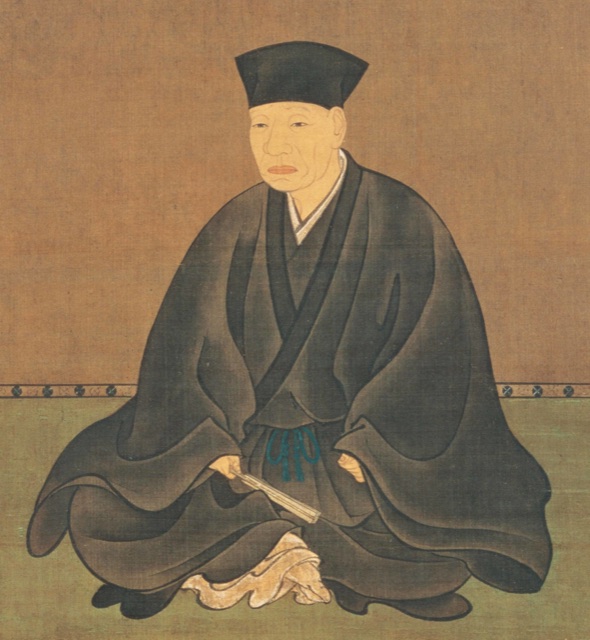
Sen no Rikyū (千利休) is the most important tea master Japan has ever had. He took what was a fashionable pastime for the rich and turned it into something much deeper, closer to a spiritual practice. More than anyone else, he shaped what the tea ceremony is today — and with it the whole idea of wabi-sabi: finding beauty in things that are simple, plain, and worn.
The way he chose
Rikyū was born into a merchant family in the port town of Sakai. He became tea master to two of the most powerful warlords of his time, Oda Nobunaga and then Toyotomi Hideyoshi, in an age when the tea ceremony had turned into a show of gold and wealth. Rikyū went the other way. He shrank the tea room down to two mats, made the doorway so low that everyone had to bow to get in, and swapped costly Chinese objects for rough local bowls, bamboo, and bare wood. He summed up the spirit of tea in four words — wa, kei, sei, jaku: harmony, respect, purity, calm.
A death by order
Being close to power was also what destroyed him. In 1591, for reasons people still argue about, Hideyoshi ordered Rikyū to kill himself. Rikyū did it in his own way: he held one last tea gathering, served his guests, gave away his tools, and then took his life. The three great tea schools he left behind — Omotesenke, Urasenke, and Mushakōjisenke — still teach in his line today. And his belief that a cracked, plain bowl can hold more beauty than a golden one is still close to the heart of Japanese taste.
Portrait: Hasegawa Tōhaku · Public domain · via Wikimedia Commons
.jpg)