Ukiyo-e artist
Katsushika Hokusai
葛飾北斎 · 1760–1849 · Edo period
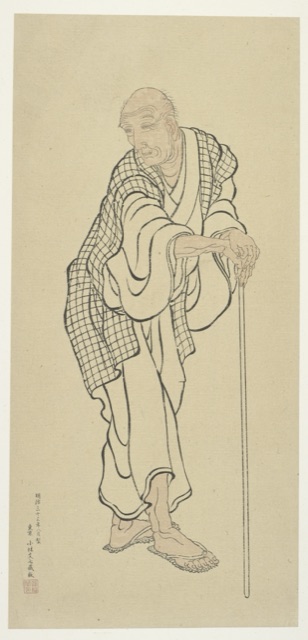
Katsushika Hokusai (葛飾北斎) is the most famous Japanese artist in the world, mostly because of one woodblock print of a wave. He never stopped working — over seventy years he made tens of thousands of pictures — but it was in old age that he made the work that changed how the world sees Japan.
The wave and the mountain
Around 1830, when he was already past seventy, Hokusai put out Thirty-six Views of Mount Fuji. Instead of painting the sacred mountain as one grand subject, he showed it small and far off, glimpsed past bridges, fields, and rooftops. One print — The Great Wave off Kanagawa, with tiny boats under a huge curling wave and a small Fuji in the distance — became the most copied image in all of Japanese art. Years later his prints reached Europe, where their flat colour and bold framing helped shape Impressionism and a wider craze for Japanese things.
The old man mad about painting
Hokusai changed his artist's name more than thirty times, and is said to have moved house over ninety. He called himself Gakyō Rōjin, "the old man mad about painting." He was sure his work kept getting better with age, and once wrote that if he were given five more years, he might finally become a real painter. He died at eighty-eight, still drawing.
Portrait: CC0 · via Wikimedia Commons
