Ukiyo-e artist
Utagawa Hiroshige
歌川広重 · 1797–1858 · Edo period
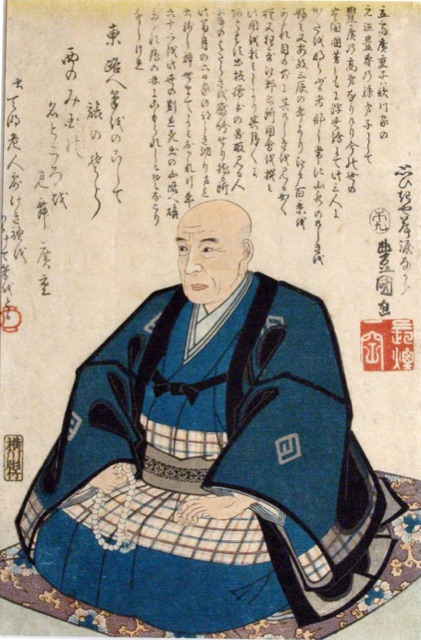
Utagawa Hiroshige (歌川広重) painted the Japanese landscape better than anyone else in woodblock print. More than any other artist, he taught the world to see Japan as a country of rain, mist, snow, and open road. If Hokusai was dramatic, Hiroshige was quiet, and his calm, weather-filled scenes carried ukiyo-e into its last golden age.
The road and the seasons
Hiroshige was the son of a low-ranking fire warden in Edo, and he found his real subject in travel. His breakthrough series, The Fifty-three Stations of the Tōkaidō, followed the great road between Edo and Kyoto, stop by stop, catching travellers in sudden rain or pushing through snow. Later, in One Hundred Famous Views of Edo, he showed his own city from surprising angles — a branch right up close, a bridge in the rain — that still look strikingly modern today.
How far a rainstorm can travel
When his prints reached Europe, one of the people who fell for them was Vincent van Gogh, who copied two of them in oil, brushstroke for brushstroke, trying to learn how they worked. Through borrowings like that, Hiroshige's rain-streaked skies and flat space made their way into Western art. He made thousands of prints, took Buddhist vows near the end of his life, and died in the great cholera outbreak of 1858.
Portrait: Utagawa Kunisada · Public domain · via Wikimedia Commons
.jpg)